Home › Guides › If I do use a pressure washer, how can I avoid damaging my patio?
If I do use a pressure washer, how can I avoid damaging my patio?
Short answer: Test a hidden area first, use a wide fan nozzle on the lowest pressure that works, keep the lance well back and moving in even strokes, and keep the jet away from the joints. Never use a narrow or rotating nozzle on natural stone. Gentler methods, such as steam, are safer if you are unsure.
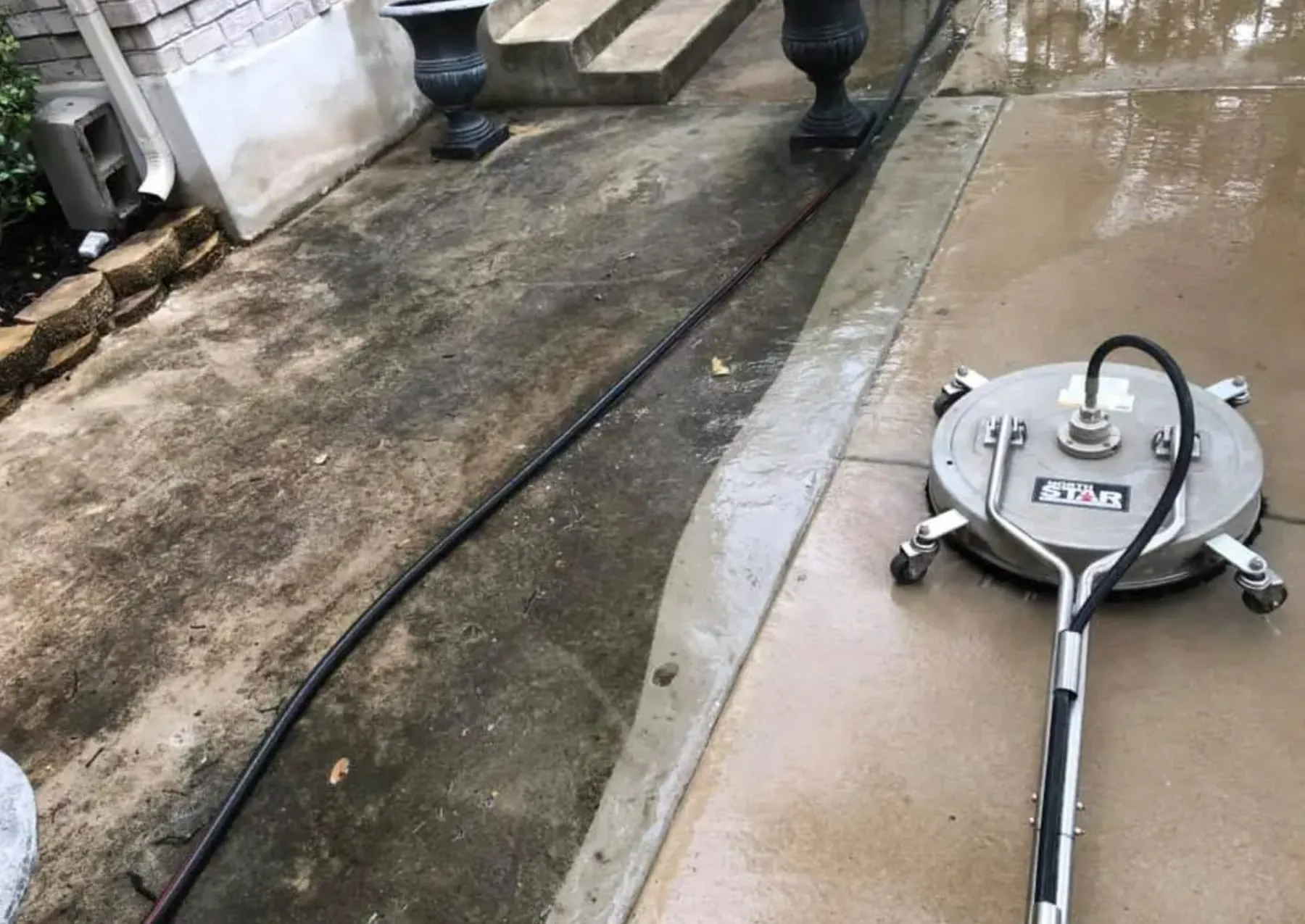
How to pressure wash a patio with the least risk
- Check what the paving is. Do not pressure wash soft natural stone, old paving or failing joints without great care. Hard, modern, well-laid paving copes best.
- Test a hidden area. Try your settings on an out-of-sight spot and let it dry before judging the result.
- Use a wide fan nozzle at low pressure. Start at the lowest pressure and work up only if needed. Avoid narrow jets, rotating "turbo" nozzles and oscillating lances on natural stone.
- Mind the angle and keep moving. Do not point the lance straight down at the paving. Manufacturers such as Marshalls advise spraying at a shallow angle, no more than about 30 degrees, in even strokes, and never dwelling on one spot.
- Keep the jet off the joints. Angle the spray along the slab rather than into the joint, to avoid blasting the sand or mortar out.
- Watch the run-off. If you see grains of stone or sand in the water running off, the pressure is too high. Do not pressure wash if frost is likely, because water in the stone can freeze and cause damage.
- Rinse, let it dry, then check the joints. Once dry, refill or repoint any joints that have lost material.
When not to pressure wash
- Soft sandstone or limestone, particularly weathered or old stone.
- Brick with soft or crumbling mortar.
- Failing or sandy joints.
- Anywhere you cannot control the pressure and distance.
A gentler alternative
If you would rather not take the risk, low-pressure steam cleans without the force that damages stone. We offer it as a service around Ascot. See the comparison of steam and pressure washing.
Frequently asked questions
What pressure should I use on a patio?
Use the lowest pressure that works with a wide fan nozzle, after testing a hidden area. Natural stone needs more caution than hard concrete or porcelain.
Should I use a rotating nozzle on a patio?
Avoid rotating or narrow nozzles on natural stone, as they concentrate the force and can pit and stripe the surface.
How do I protect my patio joints when pressure washing?
Keep the jet angled along the slab and away from the joints, and refill or repoint any that lose material.
Sources and further reading
- Marshalls: Cleaning & Maintenance Guidelines for garden paving and driveways
- Marshalls: Patio & Driveway Aftercare Guide (2022)
- US National Park Service, Preservation Brief 1: Assessing cleaning and water-repellent treatments for historic masonry
Related guides
- Does pressure washing damage patios and natural stone?
- Steam cleaning vs pressure washing: which is better for stone?
- How do I clean my patio?
General guidance only. Always test on a hidden area first and follow product instructions. Last updated 25 November 2026.
Request a quote
Tell us about the patio, wall, drive or floor and we will arrange a meeting. Or call 07907 716 893.