Home › Guides › Does pressure washing damage patios and natural stone?
Does pressure washing damage patios and natural stone?
Short answer: It can. Close-range or high-pressure washing can strip the surface from soft natural stone such as sandstone and limestone, leaving a rough, pitted finish that holds dirt and algae more easily. It can also blast the sand or mortar out of the joints. Harder, modern paving copes better, but gentler methods are safer for most stone.
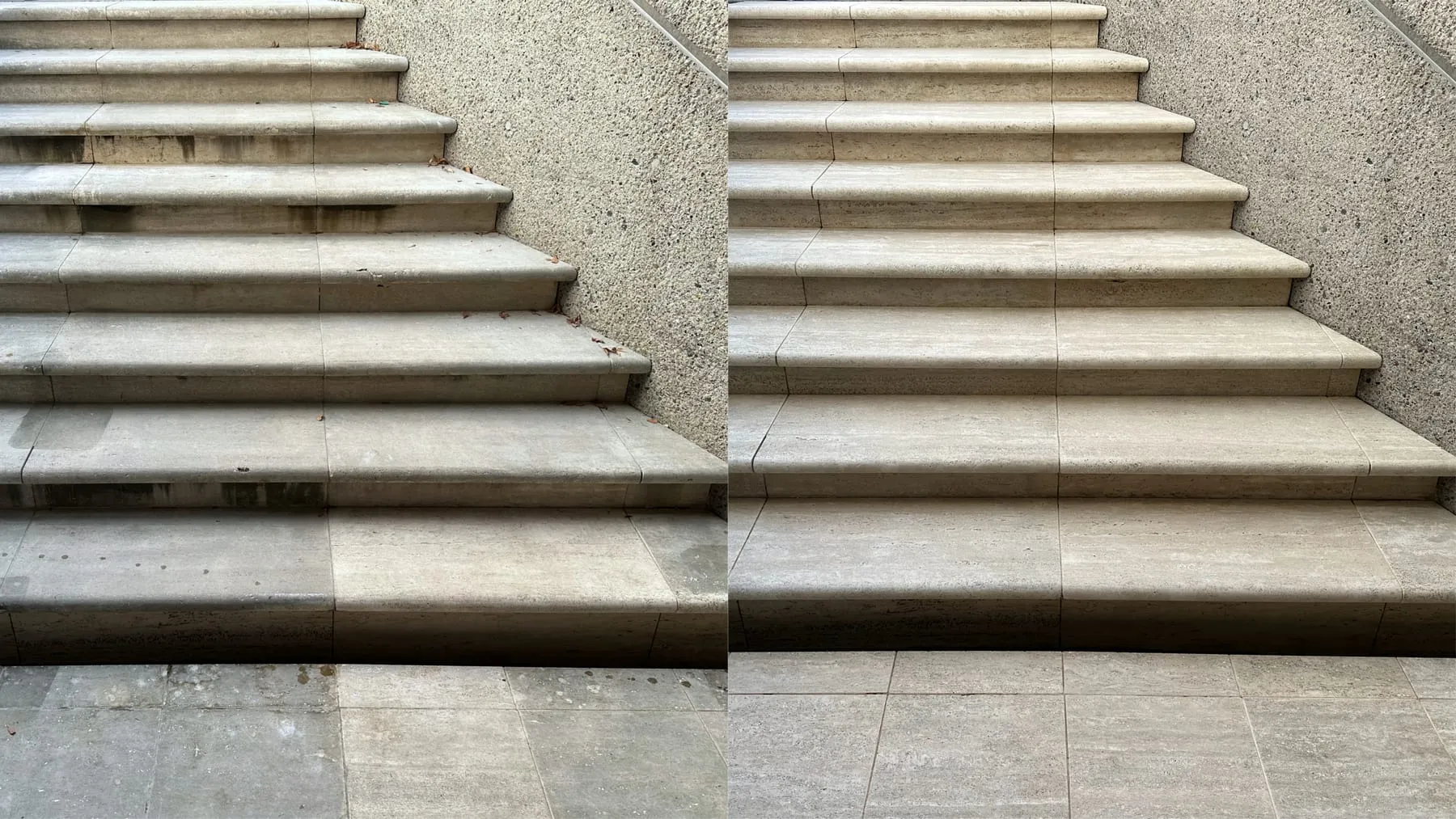
How to tell if pressure washing has damaged your stone
- Look at the texture. Run your hand over the surface. A surface that feels rougher, more open or sandy than it used to is a warning sign.
- Look for pitting and striping. Pale stripes, furrows or tiny pits where the jet passed over are typical signs of too much pressure or too close a nozzle.
- Compare with a protected area. Check a spot that has never been washed, such as under a planter or at the edge, and compare its texture and colour.
- Check the joints. Gaps where the sand or mortar has gone, or joints that are lower than the stone, suggest they have been blasted out.
- Notice how fast it re-greens. Stone that turns green or black again within months of a jet wash may have lost the protective surface that helped keep it clean.
Why pressure washing damages stone
Natural stone is porous and often relatively soft. Its smooth surface is formed by tiny fine particles, which help limit how deeply stains and moisture can get into the stone. A strong jet can blast those particles away, leaving a rougher surface with more exposed pores that traps dirt and grows algae faster.
Once that surface is lost, the stone can deteriorate more quickly, with more maintenance and a greater risk of damage to the joints or binding material around it.
What pressure washing does to joints and mortar
The sand or jointing between slabs is usually weaker than the stone. A jet aimed along a joint can strip it out, which lets weeds in, allows slabs to move and lets water get underneath. This is a common reason patio pointing fails early. If joints have been washed out, they can be repointed after a gentle clean.
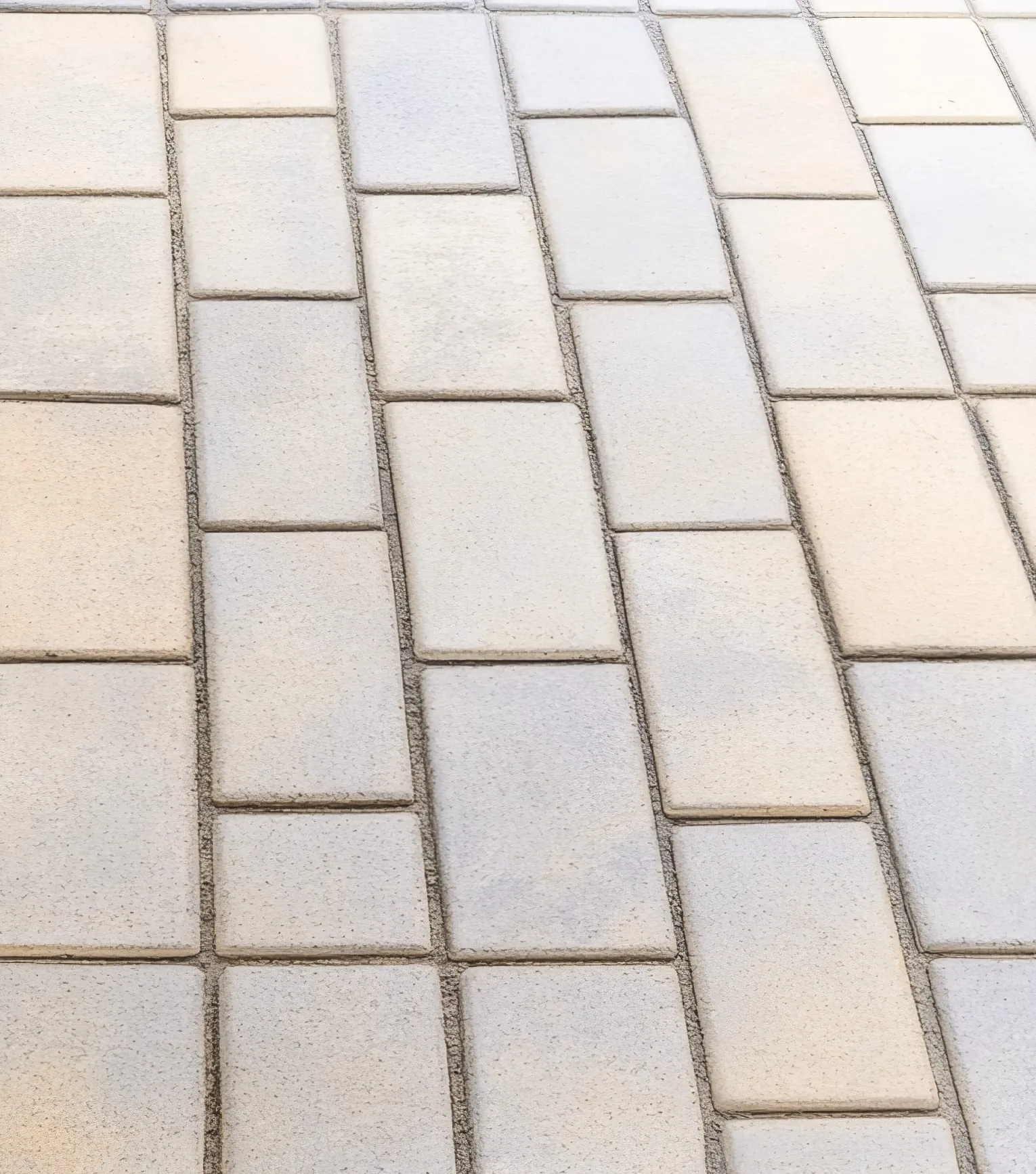
Brick and masonry
The same applies to brick and stone walls. The hard outer face of a brick helps keep water out, and strong jets can erode it and the mortar joints, letting damp in. Gentler cleaning protects both.
What to do instead
Clean with low-pressure steam or a gentle method matched to the stone. See our comparison of steam and pressure washing, and our guide to cleaning a patio safely.
Frequently asked questions
Is it safe to pressure wash a patio?
Sometimes, on hard, hard-wearing surfaces and with care, but it carries real risk for sandstone, limestone and old pointing. Test a hidden area and keep the pressure low, or choose a gentler method such as steam.
Can pressure washing damage brick?
Yes. Strong jets can erode the face of the brick and the mortar joints, which can let damp in.
Can damaged stone be repaired?
The lost surface cannot be put back, but you can clean gently, repoint any washed-out joints and protect the stone from further damage.
Why does my patio go green again so quickly after a jet wash?
A jet wash removes surface growth but not the spores in the pores, and it can roughen the stone so it holds moisture and dirt, helping growth return sooner.
Sources and further reading
- US National Park Service, Preservation Brief 1: Assessing cleaning and water-repellent treatments for historic masonry
- Marshalls: Cleaning & Maintenance Guidelines for garden paving and driveways
- Bradstone: how to clean your patio
- Prosoco: how to clean outdoor limestone
Related guides
- Steam cleaning vs pressure washing: which is better for stone?
- What are the "fines" on stone, and why do they matter?
- If I do use a pressure washer, how can I avoid damaging my patio?
- How do I clean my patio?
General guidance only. Always test on a hidden area first and follow product instructions. Last updated 25 November 2026.
Request a quote
Tell us about the patio, wall, drive or floor and we will arrange a meeting. Or call 07907 716 893.