Home › Guides › How do I clean church stonework, gravestones and memorials?
How do I clean church stonework, gravestones and memorials?
Short answer: Church stonework, gravestones and memorials should be cleaned only when needed and only gently, usually by hand with clean water and a soft natural-bristle brush. Avoid chemicals, wire brushes, abrasives and jet washing. Many memorials should not be cleaned at all except by an experienced conservator, and permission is often needed first.
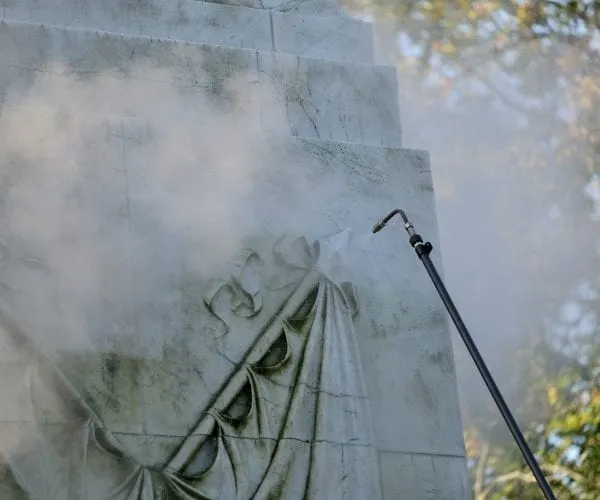
How to approach cleaning church and memorial stone
- Find out who is responsible. Check who owns and manages the stone. In a churchyard, monuments are normally subject to the church authorities, and permission, often a faculty in the Church of England, is usually needed before cleaning.
- Ask whether it needs cleaning at all. Heritage guidance is cautious. Remove growth only where it is damaging the stone or hiding an inscription, and remember that lichens can be of wildlife value, and some rare species are legally protected.
- Use the gentlest method first. Clean by hand with clean water and a soft natural-bristle brush. Avoid household products, chemicals, wire brushes, abrasives and high-pressure jets.
- Test a small area. Test patches should be done first and ideally left to weather before approving a method.
- Call a specialist for anything more. Heavy deposits, fragile or carved stone, or anything historically important should be assessed by an experienced conservator.
Why heritage stone needs a gentler approach
Old stone is often soft, weathered and fragile. Strong jets and abrasive methods remove the surface and can leave a rough, pitted finish that deteriorates faster. Conservation guidance treats low-pressure hot-water cleaning as a gentle option, but it still needs a test area and an experienced operator.
Our approach
On church and heritage stonework we use low-pressure steam, with no jet washing, and we will tell you honestly if we think a surface should be left alone or needs a conservator. See our church and heritage stone service.
Frequently asked questions
Can I clean a gravestone myself?
Only very gently, with clean water and a soft natural-bristle brush, and only with the right permission. Chemicals and abrasives can cause lasting damage.
Do I need permission to clean a churchyard monument?
Usually yes. In a Church of England churchyard, permission through the faculty system is normally required, so check with the church or diocese first.
Should lichen be removed from gravestones?
Heritage guidance suggests only where it is harming the stone or hiding an inscription. Removal can damage the stone, and some lichens are protected.
Do you clean church stonework?
We clean heritage stonework with low-pressure steam and sympathetic repointing. Listed buildings and many churches need consent for works, so please check with the relevant authority first.
Sources and further reading
- War Memorials Trust: cleaning stone
- War Memorials Trust: lichen help sheet
- US National Park Service, Preservation Brief 1: Assessing cleaning and water-repellent treatments for historic masonry
Related guides
- How do I clean limestone paving?
- What are the "fines" on stone, and why do they matter?
- Does pressure washing damage patios and natural stone?
General guidance only. Always test on a hidden area first and follow product instructions. Last updated 25 November 2026.
Request a quote
Tell us about the patio, wall, drive or floor and we will arrange a meeting. Or call 07907 716 893.