Home › Guides › How do you repoint a patio?
How do you repoint a patio?
Short answer: Repointing a patio means raking out the failed joint filler to a sound depth (at least 20 mm), cleaning the paving, wetting it, filling the joints with a suitable mortar or jointing compound, finishing the surface and protecting it while it cures. Check first that the slabs are not rocking, because new joints will not fix loose slabs.
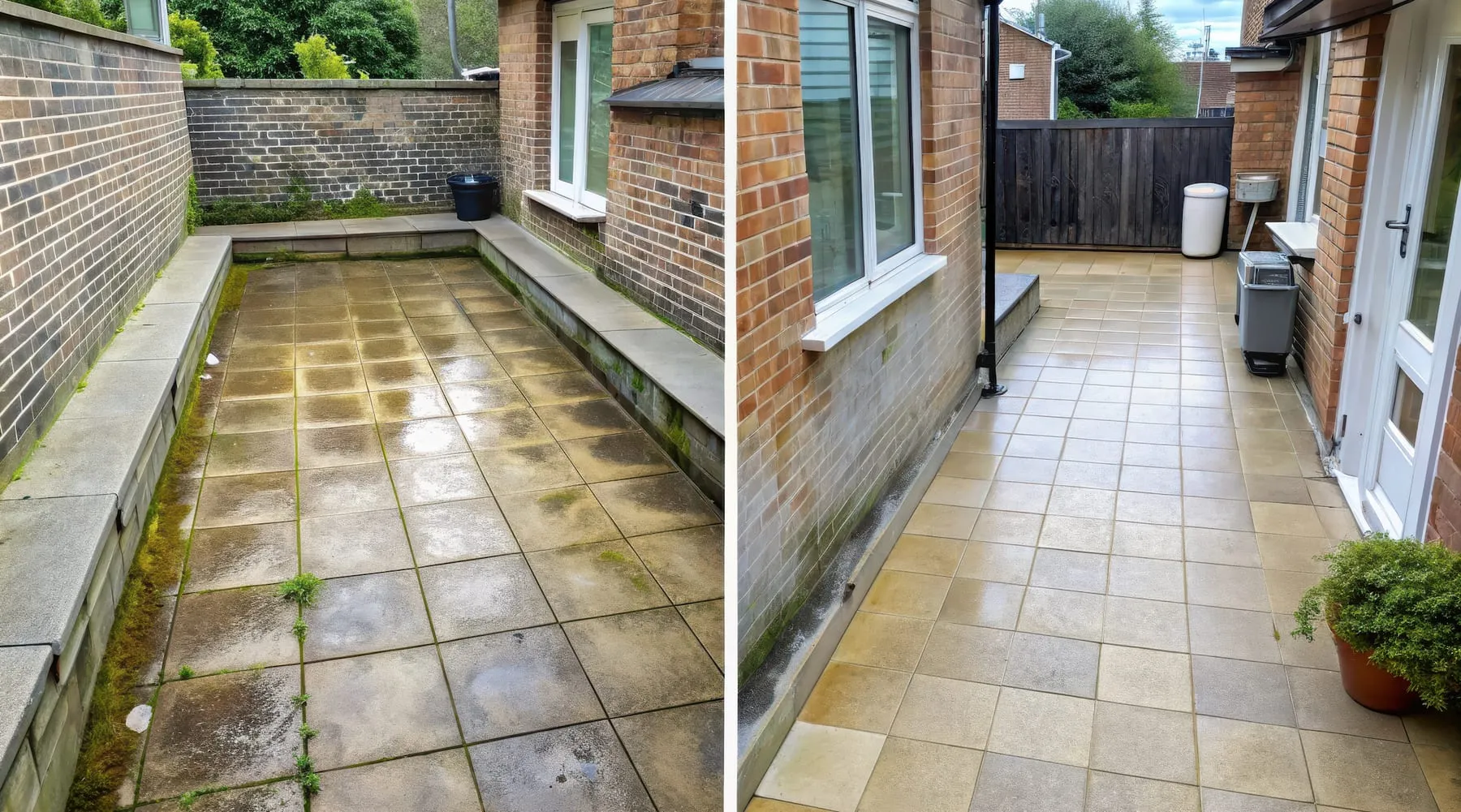
How to repoint a patio
- Check the slabs first. Walk the patio and look for rocking or sunken slabs. Re-jointing almost never fixes loose large flags, so re-bed those before you repoint.
- Rake out the failed joints. Remove crumbling, loose or missing filler with a patio knife, or a hammer and bolster, to a depth of at least 20 mm. A mortar-raking blade on an angle grinder is faster but creates dust and can score the slabs.
- Clean the paving and joints. Sweep out dust and debris, then wash the surface to remove clinging dirt. Avoid a pressure jet on joints that are sand or grit, because it can wash them out.
- Wet the paving. Most manufacturers say to saturate the paving before jointing, so it does not pull the water out of the mix. Porous stone such as Indian sandstone should be kept damp while you work.
- Test a small area. Natural stone can stain from any joint filler, including sand and cement. Try a discreet area first.
- Fill the joints. Pack the joints with your chosen mortar or jointing compound, following the product instructions on mix, depth and weather limits.
- Finish and clean down. Strike or iron the joints to a neat finish, slightly below the slab surface, and wash residue off the slabs promptly so it does not stain.
- Protect while it cures. Keep foot traffic off for as long as the product says (about 48 hours for a sand and cement mortar), and protect from rain and frost.
Signs a patio needs repointing
- Joint filler that is cracked, crumbling, sunken or missing.
- Weeds, moss or grass growing in the joints.
- Sand or soil washing out of the joints after rain.
- Ants tunnelling between the slabs.
- Faded or patchy joint colour.
When it is not just a pointing job
If slabs rock, sink or tilt, the problem is the bed beneath them rather than the joints. Those slabs need lifting and re-bedding first. Repointing over movement tends to crack again.
Weather and curing
Jointing products have limits. Marshalls, for example, specifies a minimum of 5 degrees C and rising for its polymeric compounds, and sand and cement mortar should be protected from rain, frost and strong sun while it sets. Always follow the instructions for the product you are using, as they differ between makers.
Cleaning and repointing together
Cleaning first makes it easier to see which joints have failed, and a clean surface shows the colour of the new joints properly. We offer cleaning and pointing, jointing and regrouting, so we can look at both in one quote. Tell us what you can see in the joints and send a photo or two.
Frequently asked questions
Can I repoint a patio myself?
Yes, small areas are a realistic DIY job if you have the time and patience for raking out. Large patios, porous natural stone and joints in poor condition are where a professional pays off.
How deep should I rake out patio joints?
At least 20 mm for most patio products. Some makers want 25 or 30 mm, so follow the data sheet for the product you are using.
Do I need to clean the patio before repointing?
Yes. Remove dust and debris from the joints and dirt from the surface so the new filler bonds and the finished colour looks right.
How long before I can walk on a repointed patio?
It depends on the product. Sand and cement mortar should be protected for around 48 hours, some polymeric compounds can be walked on within 24 to 48 hours, and resin slurry products around a day.
Do you repoint patios?
Yes. We offer pointing, jointing and regrouting for patios and paving alongside cleaning. Every job is quoted individually, from a visit or your photos.
Sources and further reading
- Paving Expert: re-jointing a patio or driveway
- Paving Expert: pointing and jointing for paving
- Marshalls: Weatherpoint 365 installation guide
- Royal Horticultural Society: weeds on hard surfaces
Related guides
- Mortar, jointing compound or resin: what should I use to repoint a patio?
- How much does patio repointing cost in the UK?
- Should I clean, repoint or seal my patio first?
General guidance only. Always test on a hidden area first and follow product instructions. Last updated 25 November 2026.
Request a quote
Tell us about the patio, wall, drive or floor and we will arrange a meeting. Or call 07907 716 893.