Home › Guides › How do I clean Indian sandstone paving?
How do I clean Indian sandstone paving?
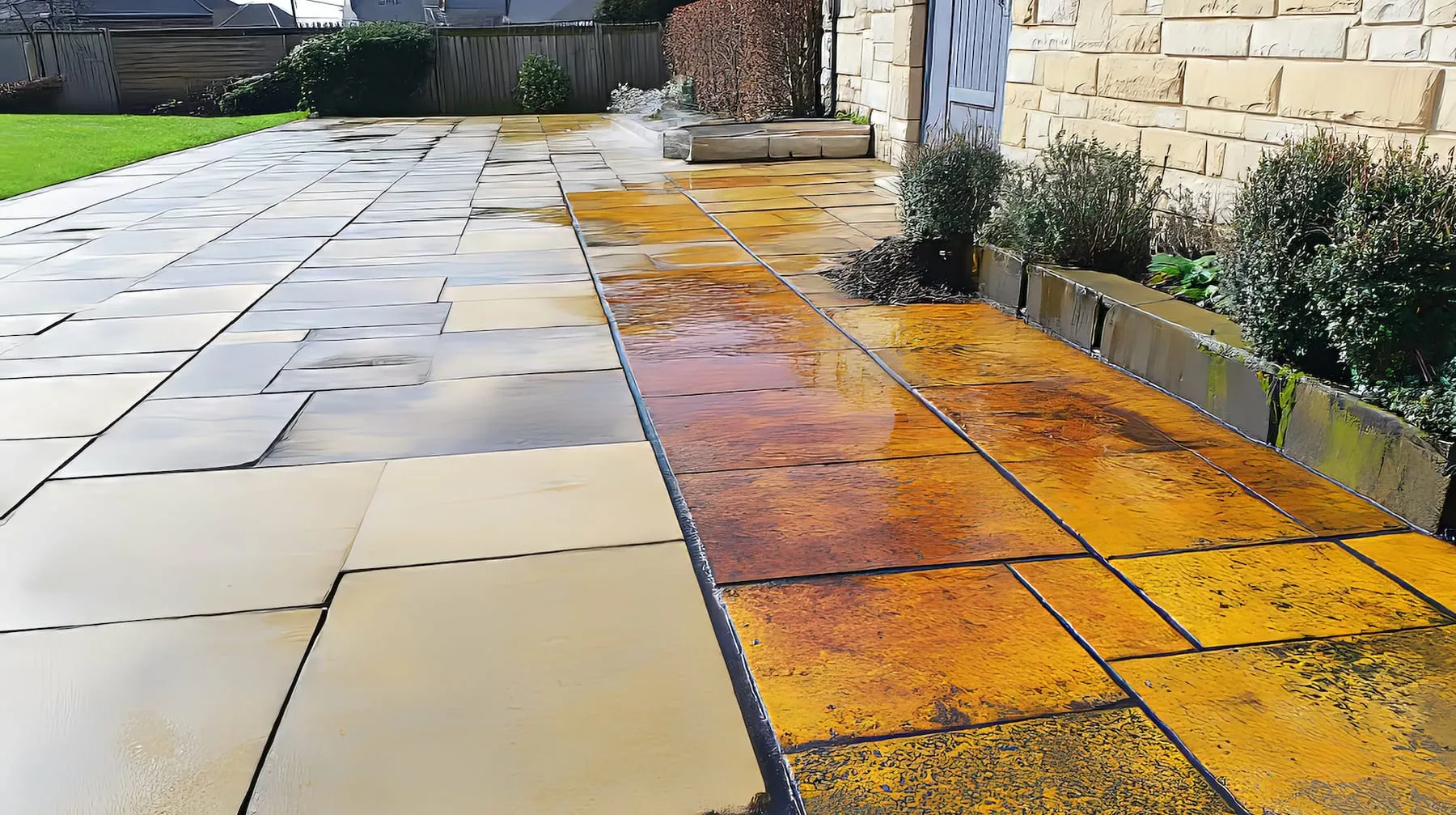
Short answer: Clean Indian sandstone with water, a soft to medium brush and a low-pressure rinse, using a stone-safe cleaner for algae if needed. Avoid acid cleaners and close-range pressure washing, which can dull and roughen the surface. Low-pressure steam is a gentle option, and sealing can help with staining, although not all manufacturers recommend it.
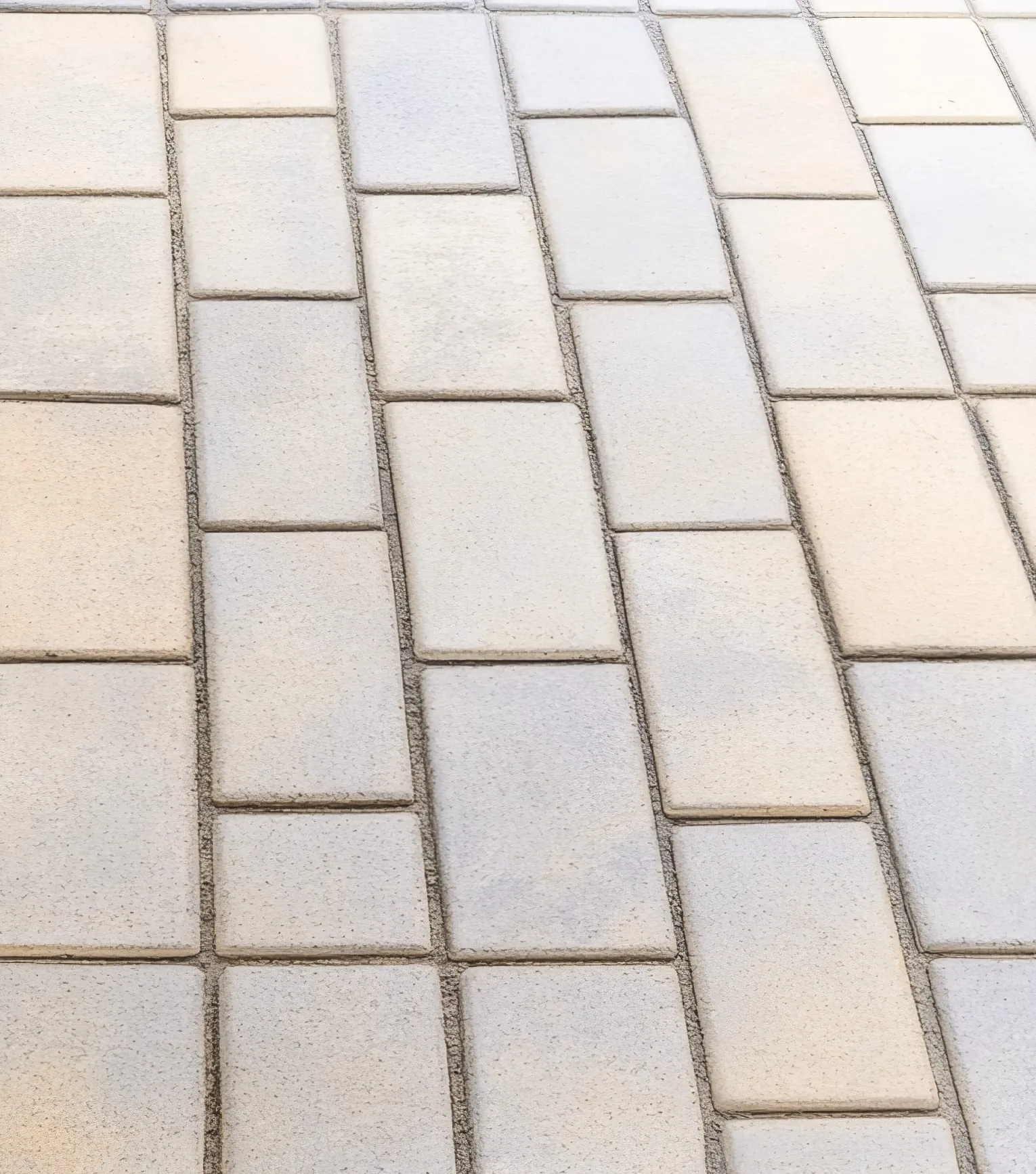
How to clean Indian sandstone
- Test a hidden area. Sandstone varies in colour and hardness. Test your method on an out-of-sight patch and let it dry before judging the result.
- Sweep and remove growth. Brush off debris and pull out weeds and moss from the joints.
- Treat algae and lichen if needed. Apply a cleaner labelled for natural stone, leave it for the time on the label, then scrub with a soft to medium brush. Manufacturers such as Marshalls advise against hydrochloric-acid patio cleaners on most sandstone.
- Rinse gently. Rinse with plenty of water at low pressure. Hold any pressure washer well back and never use a narrow jet.
- Dry, check joints and consider sealing. Once fully dry, repair worn pointing. Sealing can reduce staining but does not stop algae where damp and shade remain, and some manufacturers do not recommend it, so check your paving supplier's advice first.
Common problems on Indian sandstone
- Green algae and black spot in shaded, damp areas.
- Dark marks from leaves, soil and general dirt, as the riven surface holds dirt easily.
- Rust-coloured staining from metal furniture or pots.
- Grease from barbecues, which soaks into the porous stone.
Why pressure washing sandstone can go wrong
Sandstone is relatively soft. A strong jet can remove the surface skin and fine particles that help protect it, leaving a rougher, paler patchy finish that holds dirt more easily, and can blow the jointing out from between slabs.
Frequently asked questions
Can you pressure wash Indian sandstone?
It is risky. Strong pressure can strip the surface and wash out the joints. If you do, use a low setting, a wide fan and keep it well back, after testing a hidden area.
Should I seal Indian sandstone after cleaning?
Sealing can reduce staining and make cleaning easier, but it does not stop algae growing where it is damp and shaded, and some paving manufacturers do not recommend it. If you do seal, use a product that suits sandstone, on clean, dry stone.
How do I get rust stains off sandstone?
Rust stains are hard to remove and acid-based rust removers can damage stone, so test first or ask a specialist.
Sources and further reading
- Marshalls: Patio & Driveway Aftercare Guide (2022)
- Marshalls: Cleaning & Maintenance Guidelines for garden paving and driveways
Related guides
- How do I clean my patio?
- Should I clean, repoint or seal my patio first?
- How do I remove black spots from my patio?
General guidance only. Always test on a hidden area first and follow product instructions. Last updated 25 November 2026.
Request a quote
Tell us about the patio, wall, drive or floor and we will arrange a meeting. Or call 07907 716 893.